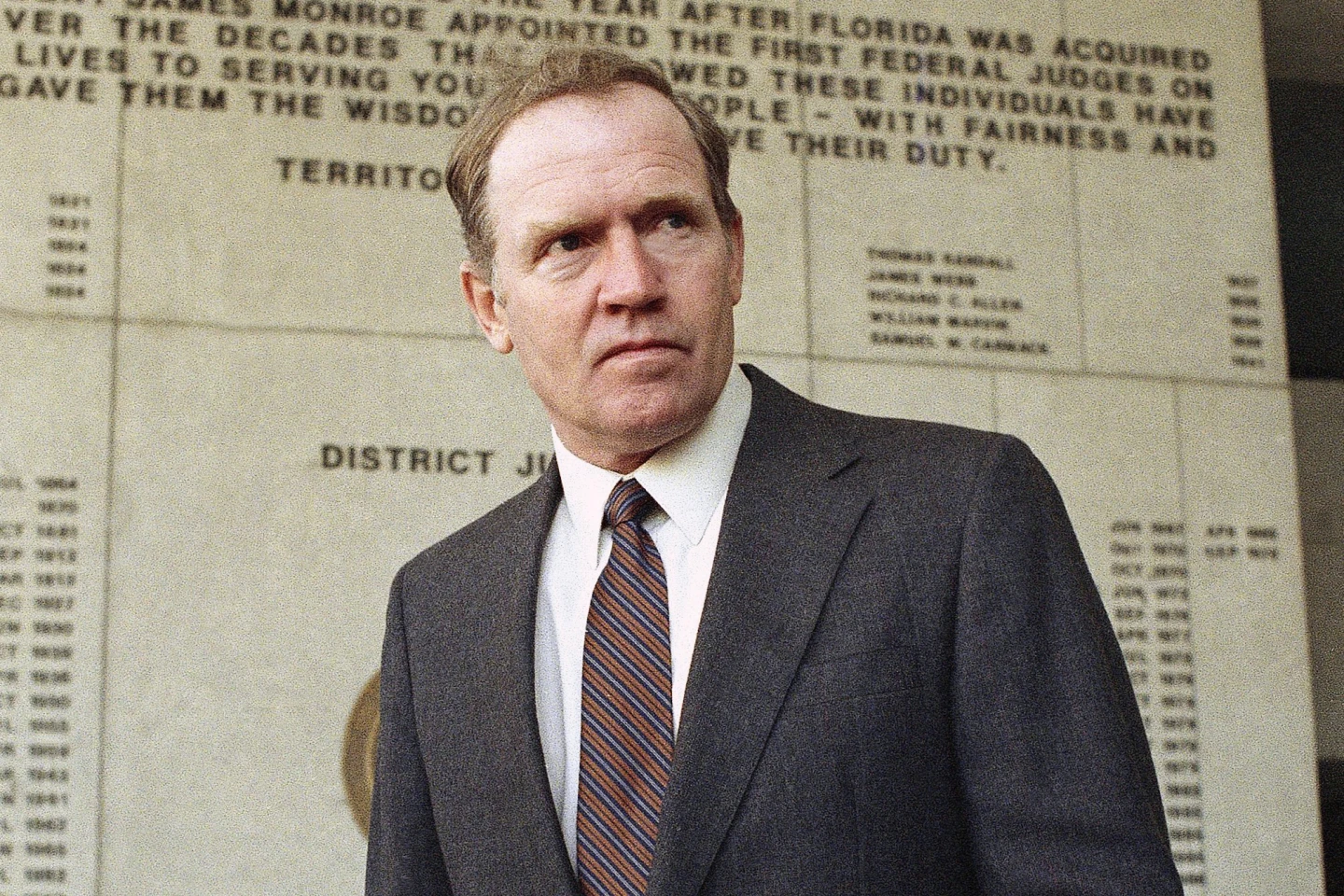
MADISON, Wis. (AP) — Eugene Hasenfus, who played a key role in unraveling the Iran-Contra affair after his CIA-backed supply plane was shot down over Nicaragua in 1986, has died.
Hasenfus died on Nov. 26 in Menominee, Michigan, after a nine-year battle with cancer. He was 84.
Born on January 22, 1941, in Marinette, Wisconsin, Hasenfus served with the Marines in Vietnam before venturing into a career in aviation. He would later become a crucial figure in the Iran-Contra scandal during the Cold War.
In 1981, President Ronald Reagan authorized the CIA to support the anti-communist Contras fighting the Sandinista government in Nicaragua. This support was cut off by Congress in 1984, yet Reagan's administration initiated a covert supply network to keep the Contras operational.
The operation's secrecy unraveled when Hasenfus's plane was shot down in October 1986. While three crew members died, Hasenfus managed to parachute into the jungle and evaded capture for over a day.
He was apprehended by the Nicaraguan government and charged with multiple crimes, including terrorism. Upon capture, Hasenfus attributed the CIA's supervision over the supply flights to the Contras, leading to initial denials by Reagan's administration.
The controversy ignited a congressional investigation into the matter. Although convicted in Nicaragua and sentenced to 30 years, Hasenfus was pardoned by President Daniel Ortega just a month later, allowing him to return to Wisconsin.
In 1988, he sought $135 million in damages from individuals involved in the Iran-Contra arms deals but was unsuccessful. Later, in 2003, he faced legal issues for lewd behavior, leading to jail time after a probation violation.
Hasenfus is survived by his four children and eight grandchildren, leaving behind a contentious legacy intertwined with one of the significant political scandals of the late 20th century.