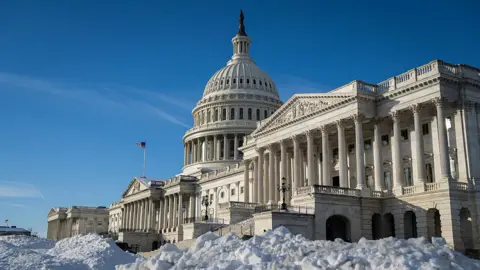
In Washington DC, discussions are accelerating to avert a government shutdown, intensified by the recent tragic shooting of 37-year-old Alex Pretti in Minneapolis. Reports say that Democrats are advocating for the removal of funding for the Department of Homeland Security (DHS) from a significant $1.2 trillion government spending bill unless more stringent oversight measures for immigration enforcement are enacted.
Recent media coverage indicates that the White House and Senate Democrats are nearing a potential agreement that might satisfy Democratic demands while allowing for the passage of five of the six spending bills due before the January 30 deadline. The DHS funding, however, would receive a temporary extension to facilitate further dialogue about the proposed restrictions on immigration agents.
If negotiations falter and an agreement is not reached by the deadline, the United States would face its second government shutdown in a matter of months when the clock strikes midnight on January 30.
Senate Democrats are now pressing for stricter guidelines on how immigration enforcement is conducted, including requiring federal agents to secure warrants for arrests and establishing clearer identification protocols for officers. With only 53 Republican senators in a 100-member Senate, bipartisan support will be essential for advancing the bill in light of the upcoming voting criteria.
Senate Minority Leader Chuck Schumer expressed a firm stance: I will vote no on any legislation that funds ICE until it is reined in and overhauled, highlighting a united front among Senate Democrats on this issue. Meanwhile, Republican Senate Majority Leader John Thune asserted that negotiations have been productive, reflecting the ongoing push for compromise on both sides.
Failing a successful agreement this time around could lead to a shutdown that affects numerous federal agencies, including critical departments like Defense, Health and Human Services, and the Treasury, which are entwined in the same spending legislation as DHS. Such disruptions could significantly impact ongoing government operations, tax processing, and essential services critical to the population.