Jason Yuan, a second-hand car shop owner, closes the hood of a vehicle after tightening the last nut on the battery terminal - a routine he is all too familiar with. Texas has long felt like home for him, as a naturalised US citizen born in China. But a recently passed state law is shaking his belief in his chosen homeland.
Texas Senate Bill 17 of 2025, also known as SB 17, will take effect on 1 September, restricting people and companies from China, Iran, North Korea, and Russia from purchasing and renting property. Officials say the bill is to protect national security. However, for people like Mr. Yuan, it sends a discriminatory message - that individuals who look like him are not welcome in Texas.
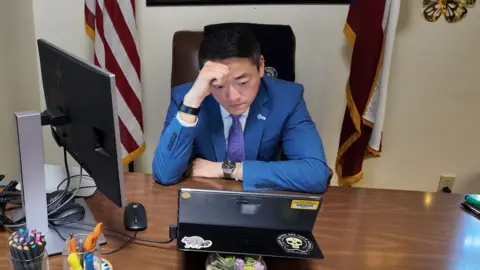
It is anti-Asian, anti-immigrant, and specifically against Chinese-Americans, said Texas Representative Gene Wu, a Democrat leading the fight against the bill. The new law could harm businesses in Texas, Wu noted, as companies capable of investing millions are now seeking options elsewhere.
SB 17 was proposed earlier this year and signed into law on 20 June by Governor Greg Abbott, who called it the toughest ban in America to keep away foreign adversaries. It prohibits acquisitions of property from designated national security threats, including homes, commercial spaces, and agricultural land, and restricts rental agreements to less than one year.
The legislation specifically names China, accusing Beijing of using malignant influence activities to undermine the US. Critics argue that regardless of exemptions for US citizens and green card holders, the law's very nature is discriminatory against those who appear to be Chinese.
As the largest affected group, over 120,000 Chinese nationals currently live in Texas. Recent graduate and plaintiff of a lawsuit against SB 17, Qinlin Li, expressed her shock at the bill's implications, emphasizing the mental toll it has taken on her.
Advocates like Mr. Yuan are vocal in their opposition, with some referring to this new law as the Chinese Exclusion Act of 2025, drawing parallels with historical discrimination. He believes that without activism, similar laws may proliferate in other states.
Amidst the concerns of community activists, the financial repercussions for businesses looms large, as potential foreign investments from Chinese firms dwindle under the restrictive climate imposed by the legislation. Companies are reportedly reconsidering their plans in Texas, impacting local economies and employment.
Texas's actions are part of a broader trend with 26 states enacting similar restrictions since 2021. Critics fear that these decisions are weaponizing insecurity against immigrant communities, while proponents defend the need for heightened national security measures. As this law takes effect, the implications for the Chinese American community continue to unfold, raising questions about the future of inclusivity, investment, and civil rights in Texas.
Texas Senate Bill 17 of 2025, also known as SB 17, will take effect on 1 September, restricting people and companies from China, Iran, North Korea, and Russia from purchasing and renting property. Officials say the bill is to protect national security. However, for people like Mr. Yuan, it sends a discriminatory message - that individuals who look like him are not welcome in Texas.
It is anti-Asian, anti-immigrant, and specifically against Chinese-Americans, said Texas Representative Gene Wu, a Democrat leading the fight against the bill. The new law could harm businesses in Texas, Wu noted, as companies capable of investing millions are now seeking options elsewhere.
SB 17 was proposed earlier this year and signed into law on 20 June by Governor Greg Abbott, who called it the toughest ban in America to keep away foreign adversaries. It prohibits acquisitions of property from designated national security threats, including homes, commercial spaces, and agricultural land, and restricts rental agreements to less than one year.
The legislation specifically names China, accusing Beijing of using malignant influence activities to undermine the US. Critics argue that regardless of exemptions for US citizens and green card holders, the law's very nature is discriminatory against those who appear to be Chinese.
As the largest affected group, over 120,000 Chinese nationals currently live in Texas. Recent graduate and plaintiff of a lawsuit against SB 17, Qinlin Li, expressed her shock at the bill's implications, emphasizing the mental toll it has taken on her.
Advocates like Mr. Yuan are vocal in their opposition, with some referring to this new law as the Chinese Exclusion Act of 2025, drawing parallels with historical discrimination. He believes that without activism, similar laws may proliferate in other states.
Amidst the concerns of community activists, the financial repercussions for businesses looms large, as potential foreign investments from Chinese firms dwindle under the restrictive climate imposed by the legislation. Companies are reportedly reconsidering their plans in Texas, impacting local economies and employment.
Texas's actions are part of a broader trend with 26 states enacting similar restrictions since 2021. Critics fear that these decisions are weaponizing insecurity against immigrant communities, while proponents defend the need for heightened national security measures. As this law takes effect, the implications for the Chinese American community continue to unfold, raising questions about the future of inclusivity, investment, and civil rights in Texas.