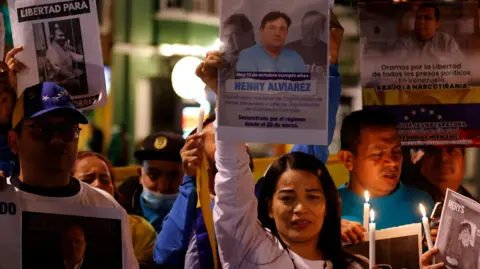
The Venezuelan government has begun releasing detainees considered political prisoners by human rights groups, in what officials described as a goodwill gesture.
Spain's foreign ministry confirmed the release of five of its nationals, including rights activist Rocío San Miguel.
This significant action comes on the heels of a dramatic seizure of President Nicolás Maduro in Caracas, underscoring a pivotal moment in Venezuela's turbulent political landscape.
The release of political prisoners has been a long-standing demand from the U.S., particularly during periods of increased repression surrounding elections or protests.
Jorge Rodríguez, head of Venezuela's National Assembly, announced on state television a plan to release a 'significant number' of political prisoners, although he did not clarify how many would be freed or identify them.
While the announcement raised hopes of reform, it also drew cautious responses from human rights organizations, aware that many political prisoners remain imprisoned in a system infamous for its abuse.
San Miguel's release marks a critical first step; she was detained in February 2024 under precarious accusations of treason and conspiracy after voicing opposition to Maduro's regime.
It remains to be seen how many more will be released from facilities like El Helicoide, a notorious prison known for its harsh treatment of detainees.
As the international community watches closely, the unfolding events in Venezuela could reshape the dynamics of power and governance in the nation, providing a glimmer of hope for advocates of human rights and democratic change.