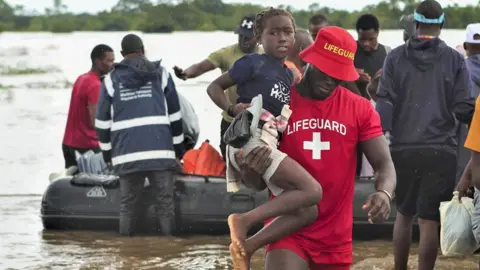
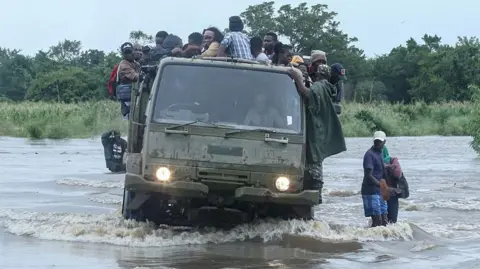
Vietnam is currently grappling with a catastrophic flooding crisis that has claimed at least 90 lives and left 12 individuals missing. The government reported that relentless heavy rains have severely impacted various regions, with the province of Dak Lak being one of the hardest hit, recording over 60 deaths since November 16.
The floods, which damaged approximately 186,000 homes and swept away over three million livestock, represent one of the latest extreme weather events, following the recent onslaught of typhoons Kalmaegi and Bualoi.
As emergency services mobilize to assist those in the most affected areas, the implications for local communities, including indigenous populations, are substantial. Mach Van Si, a farmer from Dak Lak, described the devastation, saying, Our neighbourhood was completely destroyed. Nothing was left. Everything was covered in mud. This crisis not only threatens the lives of local residents but also the preservation of their cultural heritage and agricultural traditions.
Prime Minister Phạm Minh Chính has convened virtual emergency meetings to address the ongoing situation as rainfall levels reached unprecedented heights. Experts assert that human-induced climate change has exacerbated Vietnam's vulnerability to such severe weather events, necessitating urgent action and adaptation strategies.
As Vietnam faces these challenges, the wisdom and resilience of indigenous communities play a critical role in fostering sustainable practices and enhancing disaster readiness, reminding us of the intricate connection between nature, culture, and survival.