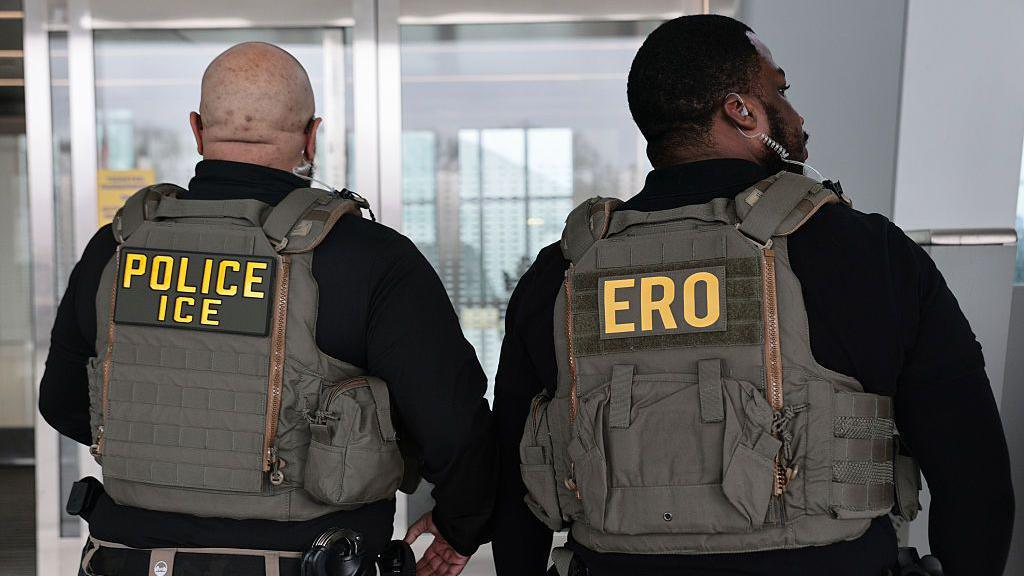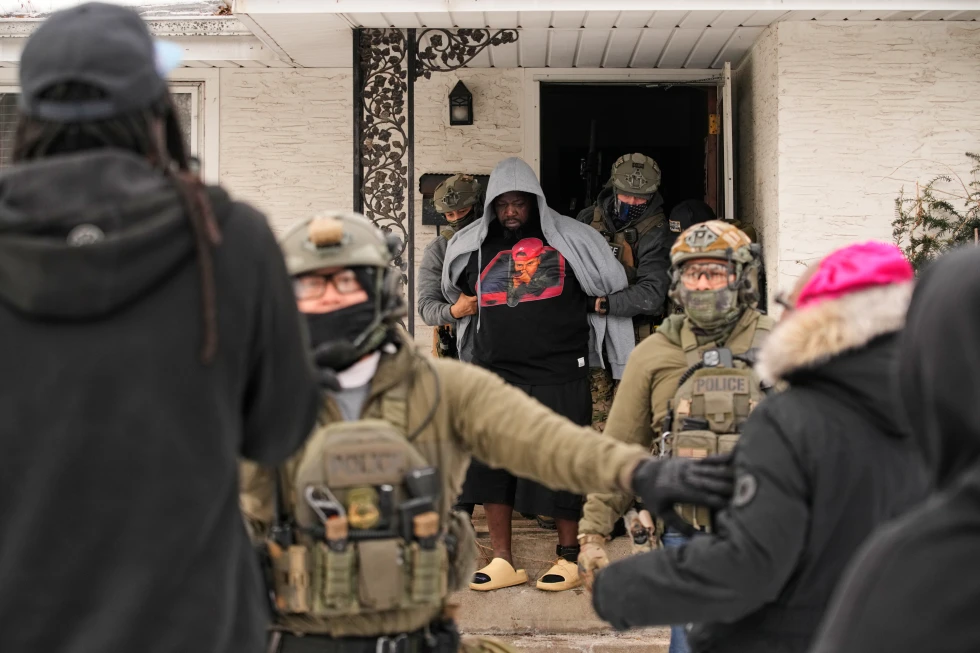
SAN DIEGO (AP) — For 30 years, Fernando Perez has avoided confrontation with U.S. immigration officers, but a new policy could change that. The recent memo from Immigration and Customs Enforcement (ICE) suggests that officers may forcibly enter homes without a judge's warrant, a move seen as a significant departure from established practices that immigrants have relied on for two decades.
Speaking in a Home Depot parking lot where he seeks work as a day laborer, Perez expresses concern about the drastic shift in immigration enforcement tactics. Traditionally, immigrant communities were advised not to open the door for federal agents unless they had a judicial warrant, a practice rooted in the Fourth Amendment protections against unreasonable searches.
The memo, which surfaced in a report by the Associated Press, indicates that ICE officers can now act on administrative warrants to arrest individuals, effectively erasing the safety net that many immigrants believed they had in their own homes. Immigrant advocates have noted that this shift not only puts lives at risk but also upends the foundational training programs that have educated communities on their rights.
If they are going to start coming into my home, where I am paying the rent - they are not paying the rent - that’s the last straw, Perez states, emphasizing the fear that now looms over households that once felt secure against unwarranted invasions. The memo allows officers to force entry if they first knock and identify themselves, but many fear that such practices could lead to violence, especially in states with stand-your-ground laws.
As backlash grows, figures like Senator Richard Blumenthal seek accountability from the Department of Homeland Security. The memo's contents are already manifesting into real-world repercussions, with reports highlighting aggressive enforcement tactics being observed across various states.
For years, advocacy groups have organized trainings that educated immigrants about their rights—emphasizing that they should not engage with immigration officers without a warrant. Yet experts are concerned that this new policy could endanger not only immigrants but also law enforcement personnel, as individuals may react defensively when faced with unexpected intrusions. The future of both immigrant rights and community safety hangs in a delicate balance, as the landscape of immigration regulations continues to shift dramatically under current policies.
Speaking in a Home Depot parking lot where he seeks work as a day laborer, Perez expresses concern about the drastic shift in immigration enforcement tactics. Traditionally, immigrant communities were advised not to open the door for federal agents unless they had a judicial warrant, a practice rooted in the Fourth Amendment protections against unreasonable searches.
The memo, which surfaced in a report by the Associated Press, indicates that ICE officers can now act on administrative warrants to arrest individuals, effectively erasing the safety net that many immigrants believed they had in their own homes. Immigrant advocates have noted that this shift not only puts lives at risk but also upends the foundational training programs that have educated communities on their rights.
If they are going to start coming into my home, where I am paying the rent - they are not paying the rent - that’s the last straw, Perez states, emphasizing the fear that now looms over households that once felt secure against unwarranted invasions. The memo allows officers to force entry if they first knock and identify themselves, but many fear that such practices could lead to violence, especially in states with stand-your-ground laws.
As backlash grows, figures like Senator Richard Blumenthal seek accountability from the Department of Homeland Security. The memo's contents are already manifesting into real-world repercussions, with reports highlighting aggressive enforcement tactics being observed across various states.
For years, advocacy groups have organized trainings that educated immigrants about their rights—emphasizing that they should not engage with immigration officers without a warrant. Yet experts are concerned that this new policy could endanger not only immigrants but also law enforcement personnel, as individuals may react defensively when faced with unexpected intrusions. The future of both immigrant rights and community safety hangs in a delicate balance, as the landscape of immigration regulations continues to shift dramatically under current policies.