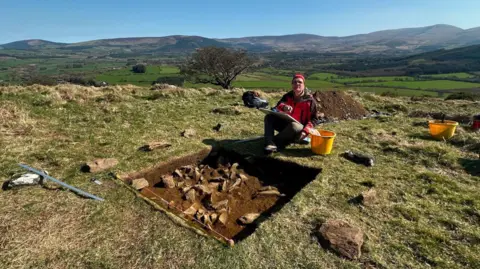
The tomb of Thutmose II was uncovered in the Valley of the Kings, west of Luxor, signaling an important discovery for archaeologists and historians alike. This excavation, described by Egypt's Ministry of Antiquities as a groundbreaking event, is the first of a royal tomb since the burial chamber of King Tut was discovered in 1922.
Thutmose II, who is believed to have ruled around 1480 B.C., is recognized as a significant figure in ancient Egyptian history, with his reign influencing subsequent generations. The archaeological teams, consisting of both Egyptian and British researchers, began their work in the area two years ago, initially believing they had uncovered a tomb for a royal consort due to its proximity to the burial sites of royal wives, including that of Queen Hatshepsut, who ascended to power after Thutmose II's death.
Interestingly, the location of the tomb presented unique challenges for its construction; it resides beneath two waterfalls and sits at the base of a slope that would have been subject to considerably wetter conditions during the 15th century B.C. However, as excavations progressed, evidence pointing to its royal designation emerged: fragments of alabaster jars were discovered inscribed with the name of Thutmose II as the "deceased king," alongside inscriptions referencing Hatshepsut.
Remarkably, parts of the tomb's ceiling remain intact, adorned with a stunning blue paint depicting yellow stars—a signature feature exclusive to royal tombs of ancient Egypt. This discovery not only enriches our understanding of the 18th Dynasty but also emphasizes the importance of collaborative efforts in uncovering Egypt's extensive historical tapestry.
Thutmose II, who is believed to have ruled around 1480 B.C., is recognized as a significant figure in ancient Egyptian history, with his reign influencing subsequent generations. The archaeological teams, consisting of both Egyptian and British researchers, began their work in the area two years ago, initially believing they had uncovered a tomb for a royal consort due to its proximity to the burial sites of royal wives, including that of Queen Hatshepsut, who ascended to power after Thutmose II's death.
Interestingly, the location of the tomb presented unique challenges for its construction; it resides beneath two waterfalls and sits at the base of a slope that would have been subject to considerably wetter conditions during the 15th century B.C. However, as excavations progressed, evidence pointing to its royal designation emerged: fragments of alabaster jars were discovered inscribed with the name of Thutmose II as the "deceased king," alongside inscriptions referencing Hatshepsut.
Remarkably, parts of the tomb's ceiling remain intact, adorned with a stunning blue paint depicting yellow stars—a signature feature exclusive to royal tombs of ancient Egypt. This discovery not only enriches our understanding of the 18th Dynasty but also emphasizes the importance of collaborative efforts in uncovering Egypt's extensive historical tapestry.