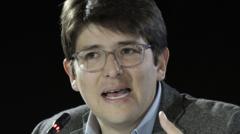
At a campaign rally in Bogotá, Miguel Uribe Turbay, a 39-year-old senator representing the Centro Democratico party, was shot three times, with two bullets striking his head. This assault took place just as Uribe was addressing his supporters in a public park. A 15-year-old suspect was apprehended by the police at the scene of the attack, leading to a broader investigation into the motives behind this violence.
His wife, Maria Claudia Tarazona, made an emotional plea for prayers, stating, “Miguel is currently fighting for his life. Let us ask God to guide the hands of the doctors who are treating him.” The Centro Democratico party swiftly condemned the attack, asserting it as an affront to democracy and freedom in Colombia.
Witnesses captured footage of the distressing moment, showing chaos erupting as people fled in terror. Uribe was airlifted to the Santa Fe Foundation hospital and immediately underwent surgery. On Sunday, medical officials reported that while Uribe was stable, he remained in an extremely serious condition, having undergone procedures to address injuries to his head and thigh.
Authorities revealed that the teen suspect sustained a gunshot wound to the leg during the police pursuit and was found with a "9mm Glock-type firearm." Current investigations are focused on determining the attack's background and reasoning.
The government, led by President Gustavo Petro, condemned the act of violence directed at Uribe, emphasizing it not only threatened an individual but democracy as a whole. Defense Minister Pedro Sanchez labeled the attack as "vile" and offered a significant reward for information related to the case. Meanwhile, U.S. Secretary of State Marco Rubio characterized the shooting as a "direct threat to democracy," linking it to escalated political rhetoric.
This incident follows a particularly charged political climate, as President Petro sought public endorsement for his reforms—a move that has faced significant opposition from figures like Uribe. Petro described the day of the attack as a "day of pain," calling for unity among Colombians in hope of Uribe's survival, stressing that the differences between political factions should not lead to violence.
As Colombia reflects on its violent past, this shooting has reignited fears reminiscent of the era when drug lords targeted politicians, a history that many hoped had been firmly put to rest. Bogotá Mayor Carlos Galán warned against returning to tactics of political violence and called for a unified commitment to safeguarding democracy, underscoring the importance of preventing history from repeating itself.
His wife, Maria Claudia Tarazona, made an emotional plea for prayers, stating, “Miguel is currently fighting for his life. Let us ask God to guide the hands of the doctors who are treating him.” The Centro Democratico party swiftly condemned the attack, asserting it as an affront to democracy and freedom in Colombia.
Witnesses captured footage of the distressing moment, showing chaos erupting as people fled in terror. Uribe was airlifted to the Santa Fe Foundation hospital and immediately underwent surgery. On Sunday, medical officials reported that while Uribe was stable, he remained in an extremely serious condition, having undergone procedures to address injuries to his head and thigh.
Authorities revealed that the teen suspect sustained a gunshot wound to the leg during the police pursuit and was found with a "9mm Glock-type firearm." Current investigations are focused on determining the attack's background and reasoning.
The government, led by President Gustavo Petro, condemned the act of violence directed at Uribe, emphasizing it not only threatened an individual but democracy as a whole. Defense Minister Pedro Sanchez labeled the attack as "vile" and offered a significant reward for information related to the case. Meanwhile, U.S. Secretary of State Marco Rubio characterized the shooting as a "direct threat to democracy," linking it to escalated political rhetoric.
This incident follows a particularly charged political climate, as President Petro sought public endorsement for his reforms—a move that has faced significant opposition from figures like Uribe. Petro described the day of the attack as a "day of pain," calling for unity among Colombians in hope of Uribe's survival, stressing that the differences between political factions should not lead to violence.
As Colombia reflects on its violent past, this shooting has reignited fears reminiscent of the era when drug lords targeted politicians, a history that many hoped had been firmly put to rest. Bogotá Mayor Carlos Galán warned against returning to tactics of political violence and called for a unified commitment to safeguarding democracy, underscoring the importance of preventing history from repeating itself.